
By Logan Parker March 24, 2026
Most merchants never realize they may be paying more than necessary for credit card processing simply because they do not fully understand their statements. Payment processing fees are often presented in complex formats filled with technical terms, small transaction charges, and confusing categories that make it difficult to identify what is fixed and what can be negotiated.
Two of the most misunderstood charges that appear on merchant statements are the Visa APF fee and the Mastercard NABU fee. These charges are typically categorized as pass-through fees in a merchant account, meaning they originate from the card networks rather than the processor. Because of this, many providers tell merchants these fees cannot be changed.
While that is partly true, it does not tell the full story.
The reality is that although some processing costs are fixed by Visa and Mastercard, other parts of your pricing structure may still include negotiable processing fees that merchants can reduce with the right understanding and review process.
This guide explains in simple terms:
• What Visa APF and Mastercard NABU fees really are
• How pass-through fees work
• Which processing fees are negotiable
• Where credit card processing hidden fees sometimes appear
• How merchants can reduce unnecessary payment costs
By the end of this guide, you will understand how to read merchant processing statement fees with more confidence and identify areas where savings may be possible.
Table of Contents
How Credit Card Processing Fees Actually Work
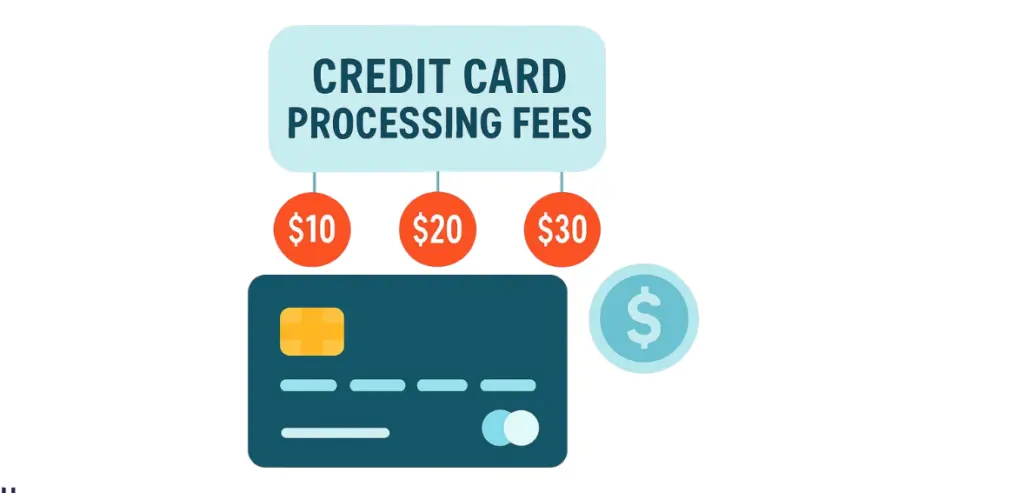
Every time a customer pays with a credit card, multiple financial institutions work together to complete the transaction. Because several parties are involved, processing costs are divided among different participants.
These typically include:
• The card network (Visa or Mastercard)
• The issuing bank (the customer’s bank)
• The acquiring bank (the merchant’s bank)
• The payment processor
Each participant takes a portion of the transaction fee. This is why merchant statements contain multiple line items instead of one simple percentage.
Understanding this basic structure makes it easier to understand any payment processing costs breakdown.
Processing costs generally fall into three main categories.
The Three Main Types of Processing Fees
Interchange Fees
Interchange fees are paid to the customer’s issuing bank. These fees are set by the card networks and usually make up the largest portion of processing costs.
These fees vary depending on:
• Card type
• Transaction method
• Industry category
• Security level of the transaction
These fees are generally not negotiable.
Assessment Fees
Assessment fees are charged by Visa and Mastercard for using their payment networks. This category includes the Visa APF fee and the Mastercard NABU fee.
These are typically considered pass-through fees.
Processor Markup Fees
This is where processors generate revenue. These fees pay for services such as:
• Transaction processing
• Reporting systems
• Customer support
• Risk monitoring
• Technology platforms
This is also where most negotiable processing fees exist.
What Pass-Through Fees Mean in a Merchant Account
Pass-through fees are charges that originate from the card brands and are passed to merchants through their processor. These fees are not typically created by the processor, but they still appear on merchant statements.
Common pass-through fees include:
• Visa APF fee
• Mastercard NABU fee
• Network access fees
• Brand usage fees
• Settlement network fees
While each fee may only be a few cents, transaction volume determines the total financial impact.
Real Cost Example
Consider a merchant processing:
• 60,000 transactions per year
• Combined APF and NABU network costs averaging about $0.03 per transaction
This could equal approximately $1,800 per year in just these two fee categories.
This example shows why even small fees matter when reviewing credit card processing’s hidden fees.
What the Visa APF Fee Really Is
The Visa APF fee stands for Acquirer Processing Fee. Visa charges this fee to cover the cost of transaction authorization and network processing.
Processors then pass this fee on to merchants.
This fee is typically charged per authorization request and may apply to both approved and declined transactions, depending on the processor’s billing structure.
Although merchants often assume this is a processor fee, it is actually a network assessment cost.
Key Things Merchants Should Know About the Visa APF Fee
• It is set by Visa
• It is charged per authorization
• It is considered a pass-through fee
• It is usually not negotiable at the base level
• It may appear differently depending on the statement format
Merchants usually cannot change the base Visa APF fee, but they should still verify that no additional markup is being added nearby.
What the Mastercard NABU Fee Really Means
The Mastercard NABU fee stands for Network Access and Brand Usage fee. This charge helps Mastercard maintain its global transaction infrastructure and payment network security.
Like the Visa APF fee, NABU is typically charged per transaction.
Because it applies to every Mastercard transaction, it contributes to total processing expenses over time.
Key Things Merchants Should Know About the Mastercard NABU Fee
• It is set by Mastercard
• It is charged per transaction
• It supports network infrastructure costs
• It is usually fixed at the base level
• It is part of the pass-through fees in a merchant account
Again, while the base cost is fixed, merchants should still review how these fees are grouped within their overall pricing structure.
Which Processing Fees Are Actually Negotiable?
One of the most important things merchants can learn is which fees they should focus on negotiating.
Trying to negotiate fixed network fees wastes time. Focusing on processor-controlled costs usually produces better results.
Processing Fee Negotiation Comparison
| Fees Type | Who Sets The Fee | Negotiable | What Merchants Should Know |
| Interchange Fees | Card Networks | No | Standard rates established by Visa and Mastercard. |
| Visa APF Fee | Visa | No | An authorization processing fee is charged by the Visa network. |
| Mastercard NABU fee | Mastercard | No | Network access and brand usage infrastructure fee. |
| Assessment Fees | Card Networks | No | Required network participation costs. |
| Processor Markup | Payment Processor | Yes | One of the largest cost-reduction opportunities. |
| Monthly Account Fees | Payment Processor | Yes | Often negotiable or removable. |
| PCI Compliance Fees | Payment Processor | Yes | May be reduced depending on the provider. |
| Gateway Fees | Payment Processor | Yes | Varies based on technology pricing models. |
This table shows that real savings usually come from processor pricing rather than network costs.
Where Hidden Processing Costs Sometimes Appear
Even when processors claim transparent pricing, merchants should still review statements carefully. Some costs may be difficult to identify without careful review.
Areas Where Extra Costs May Exist
• Authorization fee markups
• Monthly service fees
• Platform access charges
• Reporting software fees
• Minimum processing fees
These do not always indicate a problem, but merchants should understand every charge listed in their merchant processing statement fees.
Warning Signs of Possible Overpayment
Merchants should review their accounts if they notice:
• Increasing effective processing rates
• Multiple small unexplained fees
• Fee categories changing names
• Rising monthly charges
• Lack of pricing transparency
These often indicate opportunities to reduce costs.
How to Properly Review a Merchant Processing Statement
Many merchants ignore their statements because they appear too technical. However, reviewing them becomes easier when approached systematically.
Start by separating fees into major categories.
Statement Sections Merchants Should Identify
Look for:
• Interchange section
• Assessment section
• Processor fee section
• Monthly service fee section
• Equipment or software section
This separation makes it easier to identify negotiable processing fees.
Questions Merchants Should Ask During Reviews
Merchants should ask their provider:
• What is your markup above interchange?
• Are assessments passed through at cost?
• What monthly fees can be removed?
• Are authorization fees marked up?
• Have any new fees been added?
Regular reviews often prevent gradual cost increases.
Practical Strategies to Reduce Payment Processing Costs
Merchants who actively manage their accounts often pay significantly less than those who never review their pricing.
Reducing costs usually starts with focusing on controllable areas.
Areas That Usually Provide Savings Opportunities
Focus on:
• Processor markup rates
• Monthly fees
• Contract terms
• Technology costs
• Service charges
These areas typically offer the greatest flexibility.
Proven Cost Reduction Actions

Merchants can reduce costs by:
• Requesting interchange-plus pricing
• Asking for full fee disclosure
• Negotiating monthly fees
• Comparing provider pricing
• Reviewing accounts twice per year
Small adjustments often create meaningful annual savings.
Common Myths About Pass-Through Fees
Many misunderstandings exist about processing costs. Understanding the facts helps merchants avoid costly mistakes.
Processing Fee Myths Explained
Myth: All fees are negotiable
Reality: Network fees like the Visa APF fee and the Mastercard NABU fee are normally fixed.
Myth: Pass-through means no processor profit
Reality: Processors may still earn revenue through markup elsewhere.
Myth: Small fees do not matter
Reality: Small transaction fees can become large annual expenses.
Myth: Statements cannot be understood
Reality: Statements become manageable when reviewed in sections.
Knowledge remains the strongest protection against unnecessary expenses.
How Merchants Can Approach Fee Negotiations Successfully
Many merchants never attempt negotiation because they assume pricing cannot change. However, processors often have flexibility within their own pricing models.
Preparation makes negotiations more effective.
Questions Merchants Should Ask Their Processor
Merchants should ask:
• Can markup be reduced?
• Can monthly fees be removed?
• Can contract terms be improved?
• Can pricing be simplified?
• Can unnecessary services be removed?
These conversations often lead to cost reductions.
Preparation Steps Before Negotiation
Merchants should:
• Review three recent statements
• Calculate their effective processing rate
• Identify recent increases
• Understand fee categories
• Compare competitive pricing
Preparation demonstrates knowledge and strengthens the merchant’s negotiating position.
Signs a Merchant May Be Paying Too Much
Certain indicators suggest merchants should review their agreements.
Common Overpayment Warning Signs
Watch for:
• Processing rates are slowly increasing
• Monthly fees growing
• Complex fee structures
• Long contract commitments
• Unclear pricing explanations
When these issues appear, it is often worth requesting a pricing review.
Why Transparent Pricing Matters More Than Low Advertised Rates
Many providers advertise extremely low rates. However, advertised rates rarely reflect total costs.
Transparent pricing usually matters more than the lowest percentage.
Good pricing should always be:
• Clear
• Predictable
• Stable
• Fully explained
Merchants often benefit more from clear pricing than from confusing low advertised rates.
Focus on Total Processing Cost Instead of Individual Fees
Rather than focusing only on the Visa APF fee or the Mastercard NABU fee, merchants should focus on their total effective processing cost.
This includes:
• Interchange costs
• Assessment fees
• Processor markup
• Monthly charges
• Technology expenses
Understanding total costs provides the most accurate financial picture.

Conclusion
Visa APF fees, Mastercard NABU fees, and other pass-through costs are standard parts of accepting card payments. These fees usually cannot be negotiated because they are established by the card networks.
However, merchants still have significant opportunities to reduce their total processing expenses by focusing on negotiable areas such as processor markup, monthly service fees, technology costs, and contract terms.
Business owners who regularly review their statements, understand their pricing structure, and ask informed questions often achieve better financial outcomes than those who simply accept their processing costs.
Understanding how payment processing works is not just about reducing fees. It is about gaining control, improving financial visibility, and ensuring that your business operates with fair and transparent costs.
FAQs
Are Visa APF and Mastercard NABU fees negotiable?
These network fees are generally fixed. However, merchants may still reduce overall costs by negotiating processor fees surrounding them.
Why do these fees appear on merchant statements?
These fees are network costs associated with using Visa and Mastercard payment infrastructure.
How often should merchants review processing fees?
Merchants should review their statements at least twice per year to identify increases or unnecessary costs.
What fees should merchants try to negotiate?
Processor markup, monthly service fees, gateway costs, and contract terms usually provide the best savings opportunities.
What is the best way to lower total processing costs?
Understanding your full fee structure, requesting transparency, and negotiating processor-controlled fees usually produce the best results.